
Dragon's Gaze Copper Censer/Ming Dynasty
$790.00 | 1 pkg. (Min.Order)
2.Material&Craft:Solid copper,traditional casting&hand-polished
3.Design Style:Ming Dynasty
4.Dimensions:Approx.8–12 cm(H)×10–15 cm(Diameter)
5.Function&Use:For incense(stick/cone)&decorative sculpture;ideal for study,tea room,meditation space
6.Net Weight:Substantial feel(approx.330g)
Product Introduction

Product Specifications
| Parameter | Details |
|---|---|
| Material | Solid Copper |
| Craftsmanship | Ming Dynasty Casting, Hand-Finished |
| Style | Ming Dynasty , Ritual Object |
| Period | Ming |
| Dimensions | Approx. 8–12 cm (H) × 10–15 cm (Diameter) |
| Weight | Approx. 330g |
| Primary Motif | "Looking-Back" Dragon (回首龙) |
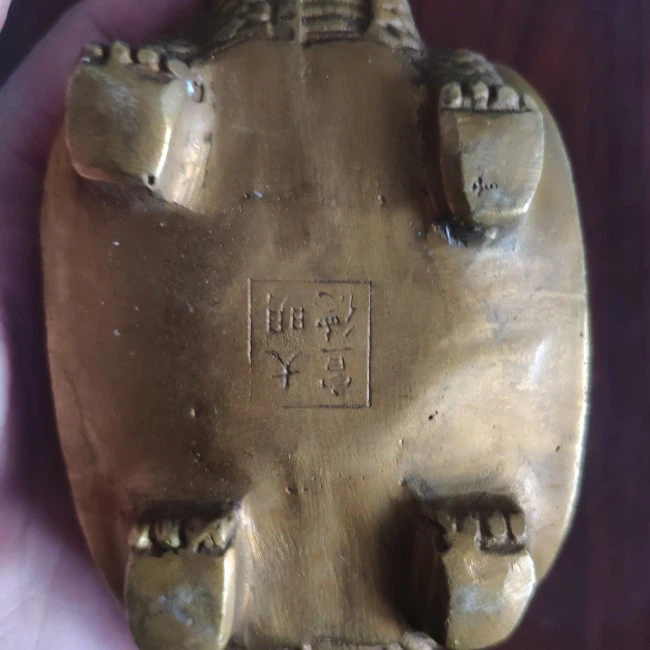
| Finish | Naturally Developed Millennia-Old Patina |
| Function | Incense Burner; Ritual Object |
| Original Setting | Temple Altar, Scholar's Studio |
| Condition | Exceptional, intact, no restoration |
Aesthetic & Symbolism

Use & Ambiance
For Ritual & Relaxation: This burner is designed to transform daily moments into mindful rituals. Place a single stick or cone of incense within its basin to create a quiet, focal point for meditation, deep reading, or the deliberate practice of a tea ceremony. The gentle, rising plume of smoke becomes a visual anchor, guiding the breath and calming the mind.
As a Standalone Sculpture: Its artistic merit is complete in itself. Even when not in use, the sculpture's powerful form and symbolic depth serve as a meaningful anchor of tranquility. It enriches any space it inhabits-a bookshelf of cherished volumes, a personal altar, a console table in an entryway, or a dedicated corner for contemplation.
Patina Development: Crafted from solid copper, this piece is a companion for the years. It is designed to age with grace and character. Over time, exposure to air and the gentle kiss of incense smoke will encourage the metal's natural oxidation, allowing its patina to deepen from a bright warmth to richer, more complex hues of bronze, brown, and verdigris. Each use subtly contributes to this evolution, making the object uniquely and personally yours.

Care Instructions
Cleaning:
For routine care, simply wipe the exterior with a soft, dry cloth once the piece has completely cooled. This removes dust and minor surface fingerprints.
Preserving Finish:
To maintain a brighter, polished shine, you may occasionally use a cloth specifically designed for copper care. Conversely, if you wish to encourage the development of a natural, uneven patina, minimal intervention is best-simply dust lightly and allow the metal to age organically.
Important Avoidances:
Avoid using harsh chemicals, abrasive cleaners, or scouring pads, as these can damage the hand-applied finish and interrupt the natural aging process. Protect the piece from prolonged excessive moisture.
Ash Disposal:
Always ensure that all incense ash is completely extinguished and cooled to room temperature before gently tapping or brushing it out for disposal. Never attempt to remove ash while the burner is still warm.
FAQ
Q: What is the significance of the "looking-back" dragon in Ming art?
A:The "looking-back" dragon (回首龙) appears in Ming dynasty art as a motif of particular spiritual depth. It represents mindful awareness, self-reflection, and vigilant guardianship. In the Buddhist and Daoist contexts that flourished during the Tang, the backward-gazing dragon symbolized the enlightened being who watches over all creation while remaining ever aware of its own true nature. This rare variation is highly prized among collectors of Tang material culture.
Q: How was this censer originally used?
A:This censer would have held incense in a Tang dynasty temple, shrine, or scholar's studio. Incense burning was central to both Buddhist and Daoist ritual practice, as well as to the scholarly life of the Tang elite. The rising smoke carried prayers to the heavens, purified the space, and aided concentration during meditation, reading, and writing. The careful handling evidenced by the preserved patina suggests this piece was revered and protected by its users for generations.
Q:What does the patina tell us about its age?
A: The patina is the most reliable visible evidence of the censer's great age. Copper naturally oxidizes over time, and the specific character of this oxidation-its depth, its iridescence, its stratification-could only have developed over many centuries. Modern patination techniques cannot replicate the complex, layered character of naturally aged metal. The pattern of wear, the subtle smoothing from handling, and the overall integration of the patina with the metal surface all confirm its authenticity and antiquity.
Q: Why is this piece so rare?
A: Copper and bronze objects from the Tang dynasty are far rarer than ceramics, as metal was often recycled in subsequent periods. Ritual objects that survived were typically those treasured in temple or collection settings continuously for centuries. A complete, intact censer with such a refined and meaningful motif, preserved with its original patina undisturbed, is of exceptional rarity-a museum-quality object that would be a highlight of any collection of Chinese art.
Provenance
Verity Antique acquired this exceptional Ming dynasty censer from a distinguished European private collection specializing in early Chinese metalwork, formed in the early twentieth century with provenance tracing to the late Qing period. Our founder personally selected this piece for its extraordinary rarity, its powerful and meaningful "looking-back" dragon motif, its magnificently developed millennium-old patina, and its importance as a surviving artifact from China's greatest golden age. When you acquire this censer from Verity Antique, you receive not merely a masterpiece of Ming metalwork but a sacred object that has witnessed over a thousand years of human devotion-a vessel that embodies the spiritual and artistic genius of the Ming dynasty and carries the accumulated presence of countless rituals. We provide the scholarship, the provenance, and the absolute confidence that permits you to display this work as a testament to Ming civilization and to your own discerning judgment as a collector of the rarest and most significant works of Chinese art. To hold this censer is to touch the Ming dynasty; to display it is to live with a fragment of China's golden age.
Hot Tags: dragon's gaze copper censer/ming dynasty, China dragon's gaze copper censer/ming dynasty
Send Inquiry