

Zhou Dynasty Bronzes: The Voice of Ancient China
Mar 06, 2026
Leave a message
Introduction: When Bronze Spoke
The Zhou Dynasty (1046-256 BCE) is the longest in Chinese history-over 800 years that shaped the philosophical and ritual foundations of Chinese civilization. This was the age that gave us Confucius and Laozi, that codified the rituals of ancestor worship, and that produced some of the most magnificent bronze vessels ever created.
But Zhou bronzes are different from their Shang predecessors. They don't just stare at us with mysterious animal masks. They speak.
For a collector like me, standing before a Zhou bronze is as close as we can get to hearing the voice of ancient China. The inscriptions aren't just decoration-they are messages from the past, cast in metal to last forever.
At Verity Antique, my collection includes pieces that span the Zhou Dynasty. Visit our website to explore them.
What Makes Zhou Bronzes Special?
1. Inscriptions That Tell Stories
Shang bronzes rarely carry more than a clan mark. Zhou bronzes tell stories-sometimes very long ones .
The famous He Zun (何尊) , a ritual wine vessel from the early Western Zhou, bears a 122-character inscription recording the accomplishments of King Cheng and the relocation of the capital . More remarkably, it contains the earliest known written reference to "China" (zhai zi Zhongguo)-the first time the name appeared in history .
Other bronzes read like history books. The Qian Pan (墙盘) records the lineage of seven Zhou kings. The Shi Qiang Pan (史墙盘) continues the story. These vessels weren't just ritual objects-they were bronze archives .
A typical inscription might read: ". . . made this precious sacral vessel in honor of [name]"-a dedication to an ancestor, a record of a royal reward, a marker of family pride .
2. Forms That Evolved Across Eight Centuries
The Zhou Dynasty is conventionally divided into Western Zhou (c. 1046-771 BCE) and Eastern Zhou (770-256 BCE), the latter further split into Spring and Autumn and Warring States periods. Bronze styles changed dramatically across these eras.
Western Zhou (c. 1046-771 BCE) : Early Zhou bronzes continue Shang traditions-the imposing taotie masks, the solemn ritual forms. But gradually, new shapes emerge. The handled food vessel, or gui, becomes increasingly elaborate . A magnificent example from the late 11th century BCE shows coiled dragons spreading across each side, with animal-headed birds forming the handles . There's confidence here-the confidence of a new dynasty establishing itself.
Eastern Zhou (770-256 BCE) : As central power weakened and regional states grew stronger, bronze art diversified. The famous "Hu" wine vessel in the Royal Ontario Museum, dated to the 5th century BCE, shows this transformation perfectly . Its surface is covered in five horizontal registers with a dense, interconnected dragon pattern so abstracted that the dragons are almost unrecognizable-reduced to square elements with raised comma-shaped accents .
This isn't decline. It's evolution. The design became so compressed and refined that it transcended representation entirely.
3. Decoration That Moved From Mystery to Abstraction
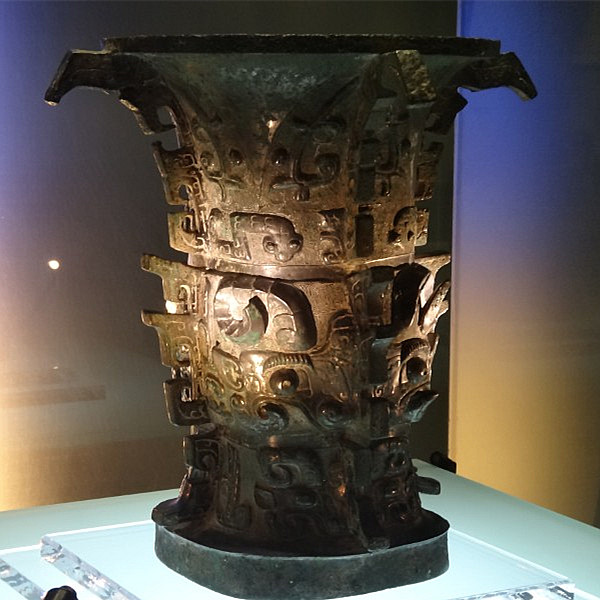
Early Zhou decoration retains the powerful animal imagery of Shang-the taotie mask, the coiled dragon, the stylized bird . A zun vessel from the 11th century BCE displays a taotie mask with characteristics descended directly from Anyang period motifs .
But over time, the decoration changes. The animals become more abstract, more geometric. The famous "interlaced dragon" pattern of the Eastern Zhou period started as a broad, open design with clearly defined dragons, but gradually simplified to the point of abstraction .
This wasn't just aesthetic drift. It reflected deeper changes in Zhou society-the rise of regional powers, the evolution of ritual practice, the shift from a unified kingdom to a world of competing states.
4. Technique That Pushed Boundaries
Zhou bronze casters were technical masters. The famous Zi Zhong Jiang Pan (子仲姜盘) from the Spring and Autumn period shows what they could achieve: inside the basin, three-dimensional animals-fish, frogs, water birds-rotate 360 degrees in place. They move when water is poured .
This is the pinnacle of bronze technology-casting that seems almost impossible even today.
Later Eastern Zhou bronzes also show evidence of master pattern blocks-repeating designs impressed onto molds, a step toward simplifying production . This wasn't "mass production" in the modern sense, but it was efficiency, and it allowed bronze art to reach wider audiences.
The Major Vessel Types
Zhou bronzes come in many forms, each with specific ritual functions:
Ding (鼎) : Tripod cauldrons for cooking and offering meat. The number of ding a noble could possess was strictly regulated by rank-nine for the king, seven for a duke, and so on.
Gui (簋) : Food vessels, often with handles, for offering grain . A rare Western Zhou gui sold at Christie's features four loop handles and legs detailed as mythical birds-a testament to the imagination of Zhou craftsmen .
Zun (尊) : Wine vessels, often tall and elegant . The Cleveland Museum of Art holds a magnificent zun from c. 1000 BCE, its middle section cast with bold buffalo heads with protruding horns .
Hu (壶) : Wine storage vessels with closed bodies and narrow necks . The Royal Ontario Museum's hu from the 5th century BCE is a masterpiece of abstract design .
You (卣) : Wine vessels with swing handles, often elaborately decorated .
Pan (盘) : Water basins, sometimes with movable animals inside .
He (盉) : Water or wine vessels with spouts, used for pouring .
Regional Styles: Beyond the Central Plains
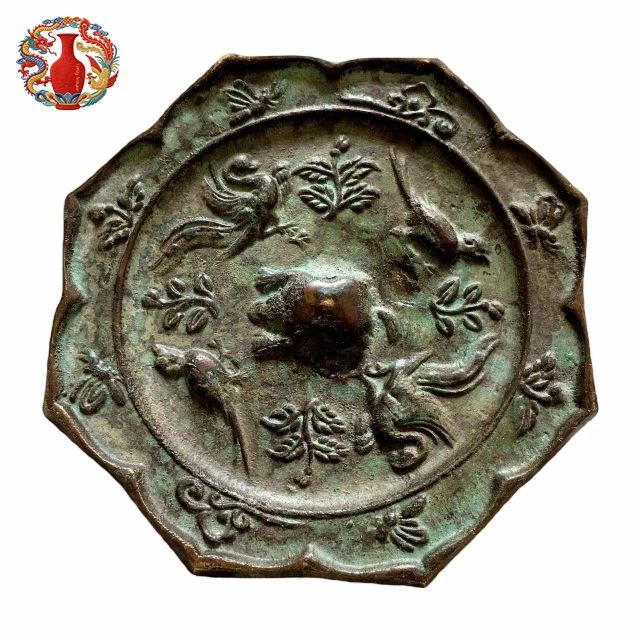
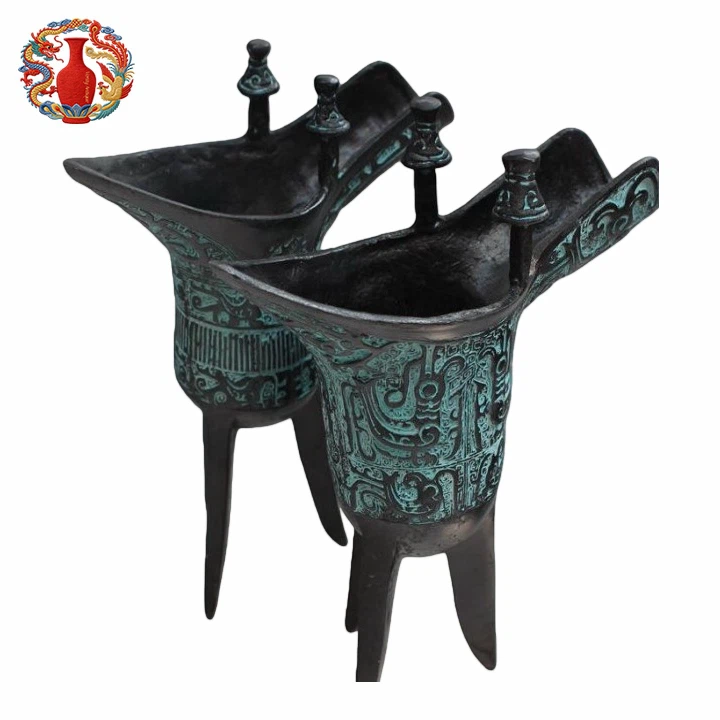
While the Zhou heartland lay in the Wei River valley (modern Shaanxi), bronze casting flourished across China .
Hunan Province produced bronzes with distinctive local characteristics . An exhibition of Hunan bronzes featured the only known ding decorated with human masks, an elephant-shaped zun combining aesthetic and functional value, and a bronze you with a swinging handle and phoenix design . These pieces blend Central Plains traditions with southern imagination-romantic, exuberant, unlike anything found in the north.
The Kingdom of Chu developed its own bronze culture, romantic and flowing, quite different from the formal styles of the Zhou court .
Yue ethnicity bronzes show yet another tradition-typical of the southeastern coastal regions .
For collectors, this regional diversity means Zhou bronzes are never boring. Every piece reflects not just its time, but its place.
What Collectors Look For
Inscriptions
Zhou bronzes are prized for their inscriptions. Look for:
Length and content-longer inscriptions tell more important stories
Historical significance-references to known kings, battles, or events
Calligraphic quality-the beauty of the bronze script itself
Clarity and preservation-inscriptions should be legible
Form and Function
Early Western Zhou: Forms continue Shang traditions, with bold, powerful shapes
Middle Western Zhou: New shapes emerge, decoration becomes more stylized
Late Western Zhou: Increasing refinement, precursors to Eastern Zhou developments
Eastern Zhou: Regional diversity explodes, decoration becomes increasingly abstract and elaborate
Patina
The surface of ancient bronzes-the patina-is crucial. Genuine Zhou bronzes develop complex patinas over millennia: mottled green and dark grey, sometimes with azurite blue . These cannot be faked convincingly.
Provenance
Known collection history adds confidence and value. Many Zhou bronzes in Western museums came from early 20th-century collections . Pieces with documented excavation sites-like the Jin Cun tombs near Luoyang-are particularly valuable .
Caring for Zhou Bronzes
Bronze is stable but sensitive:
Environment: Stable temperature and moderate humidity
Handling: Wear gloves; oils from skin can damage patina
Display: Avoid direct sunlight, which can alter surface colors
Cleaning: Never clean bronze yourself. Professional conservation only.
Documentation: Keep all provenance and authentication papers
Where to See Zhou Bronzes
In China:
Baoji Bronze Museum: China's first bronze-dedicated museum, home to the He Zun and over 3,000 national treasures
National Museum of China: Regularly hosts major bronze exhibitions
Hunan Provincial Museum: Extraordinary regional bronzes from the south
In the West:
Royal Ontario Museum: Fine Eastern Zhou hu with abstract dragon decoration
Art Institute of Chicago: Magnificent Western Zhou gui with coiled dragons
Cleveland Museum of Art: Powerful zun with buffalo heads
Toledo Museum of Art: Yu vessel with clear inscription
Art Gallery of New South Wales: Elegant early Western Zhou zun
A Collector's Reflection
I've held Zhou bronzes in museums across the world. I've traced inscriptions with my finger (carefully, always carefully) and imagined the rituals they witnessed. I've stood before the He Zun in Beijing and felt the weight of those first characters for "China."
What moves me most is the voice in these objects. Shang bronzes are magnificent, but they're silent. Zhou bronzes speak. They tell us who made them, why, for whom. They record battles and appointments and family pride. They reach across three thousand years and touch us directly.
A Zhou bronze inscription from the Toledo Museum reads: "Zhong Cheng makes his treasured vessel, to use to feast the king's reciprocal immortalizing" . That's not just decoration. That's a man speaking to us-a man who lived in the 10th century BCE, who wanted to honor his king, who had this vessel cast so his name would survive.
It did.
Explore the Zhou Dynasty pieces in the Verity Antique collection. Let these ancient voices speak to you.
Selected Zhou Bronzes in the Verity Collection
| Type | Period | Description |
|---|---|---|
| Gui (food vessel) | Western Zhou | Handled vessel with dragon decoration |
| Hu (wine vessel) | Eastern Zhou | Abstract interlaced pattern |
| Zun (wine vessel) | Western Zhou | Elegant flared form with taotie motif |
| Ding (cauldron) | Western Zhou | Tripod form with ritual significance |
With warmth and respect for the past,
Verity Antique
Visit Our Zhou Dynasty Gallery | Browse All Collections | Contact Me
Verity Antique is a private collection shared with those who value the connection to history that authentic objects provide. All pieces are personally collected, authenticated, and documented.