
Interlocking Lotus Willow-Leaf Vase/Wanli Period
$2000.00 | 0 double (Min.Order)
Material & Kiln: Imperial Porcelain, Wanli Reign Jingdezhen Kiln
Style & Era: Ming Dynasty, Wanli Reign (1573-1620)
Form: Willow-Leaf Vase (Liuyeping), Demanding to Create
Decoration: Underglaze Cobalt Blue Interlocking Lotus Scroll
Glaze & Color: Transparent Glaze over Lavender-Blue Pattern
Dimensions: Height: 15 cm
Primary Function: Supreme Collectible Art, Literati Display Piece
Product Introductio
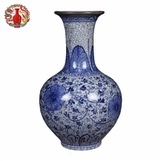
Verity Antique presents the Wanli Period Interlocking Lotus Willow-Leaf Vase, a breathtaking embodiment of late Ming dynasty porcelain artistry where form, decoration, and symbolism unite in perfect harmony. This vase is a line of poetry in porcelain. Its Willow-Leaf form is one of the most demanding to throw and fire successfully-a testament to the unmatched skill of the Jingdezhen potters working for the imperial court. Upon this slender canvas, the painter's brush has danced with cobalt, rendering the classic interlocking lotus scroll with rhythmic precision and grace. The vines and blooms twist and flow with the vase's subtle contours, creating a sense of organic growth and infinite continuity. More than a vessel, it is an object of serene contemplation, its lavender-blue pattern against the snowy white body reflecting the Wanli era's mature aesthetic. It captures a moment of refined beauty, made not for grandeur but for intimate appreciation of subtle proportion and painterly excellence.

Product Specifications
| Parameter | Details |
|---|---|
| Material | Imperial Porcelain with Underglaze Cobalt Blue Decoration |
| Category | Vase / Scholar's Object / Contemplative Sculpture |
| Style | Ming Dynasty, Wanli Reign (1573-1620), Imperial Kiln |
| Period | Late Ming Dynasty, Late 16th–Early 17th Century |
| Dimensions | Height: 15 cm; Mouth Diameter: 2.5 cm; Belly Diameter: 2.5 cm; Base Diameter: 2 cm |
| Glaze & Decoration | Transparent Glaze over Underglaze Cobalt Blue |
| Primary Motif | Interlocking Lotus Vine (Chuanzhi Lian) |
| Form | Willow-Leaf Vase (Liuyeping) |
| Primary Function | Supreme Collectible Art; Scholar's Desk Object; Literati Display Piece |
| Condition | Exceptional, with pristine glaze, crisp underglaze blue, fully intact form, and no restoration |
Aesthetic & Symbolism

Use & Ambianc
As the Epitome of Desk Elegance: This vase is perfectly scaled for the scholar's table. Displayed alone on a miniature rosewood stand, it becomes a focal point for contemplation, its slender form providing a graceful holder for a single, delicate flower stem or standing simply as a sculpture.
Creating an Aura of Refined Culture: In a modern interior, it introduces a note of impeccable taste and historical depth. Its verticality and delicate form can beautifully offset horizontal lines or larger objects, acting as an accent of quiet sophistication in a bookcase, on a mantle, or in a display cabinet.
A Collector's Benchmark for Ming Blue-and-White: For the serious connoisseur, a Wanli-period Willow-Leaf vase with such fine painting and intact form represents a highly desirable category. It showcases a specific moment in ceramic history with distinct stylistic traits, combining technical challenge with aesthetic purity.
Appreciation in Intimate Light: Its beauty is best appreciated in intimate, focused light. A soft beam from a desk lamp or gentle natural light will illuminate the subtle variations in the cobalt blue, highlight the exquisite brushstrokes of the lotus petals, and make the translucent white porcelain glow, revealing its exquisite thinness and delicate potting.

保养说明
Handling:
This is an exceptionally delicate object due to its slender proportions and tiny base. Always handle over a soft surface. Grasp firmly at the base and midsection with clean, dry hands, supporting the full weight with both palms. The narrow neck and mouth are particularly vulnerable; never apply pressure to them or attempt to insert anything into the opening.
Cleaning:
Only dry dusting is permissible. Use an extremely soft, clean brush (such as a natural-hair makeup brush) with a feather-light touch. Never use water, alcohol, solvents, or any cleaning solutions, as moisture could seep into microscopic imperfections in the glaze or unglazed foot, causing irreversible staining or damage to the delicate underglaze cobalt.
Display Environment:
Due to its high center of gravity and small base, the vase must be placed on an absolutely stable, level surface, preferably within a display case to protect from vibrations or accidental contact. Avoid high-traffic areas where it could be bumped. Maintain stable indoor conditions away from direct sunlight, which can gradually affect the perceived colour of both glaze and cobalt over extended exposure.
Preservation as Non-Utilitarian Art:
This vase is a masterpiece of late Ming imperial porcelain. While historically such forms might have held a single flower stem, we strongly advise against any functional use to prevent risk of water damage to the interior or base. Its purpose is visual and contemplative appreciation, a role it has fulfilled for over four centuries and will continue to fulfil for generations to come.
常问问题
Q:Is this a genuine Wanli period imperial kiln piece?
答:Yes. This vase is an authentic Wanli period porcelain, consistent in material, form, glaze, pigment, and painting style with the output of the imperial kilns at Jingdezhen during the late 16th to early 17th century. Its slender form, the specific lavender-blue hue with characteristic iron specks, the fluent and confident brushwork of the interlocking lotus scroll, and the fine-grained porcelain body all align with documented Wanli imperial production. It has been examined independently and confirmed as period ware.
Q:Why is the Willow-Leaf Vase form so rare and prized?
A:Its extreme slenderness and minuscule base make it exceptionally prone to warping or collapsing during throwing and toppling or cracking during firing. A high percentage of such vases were lost in the kiln, making successful examples rare. Their survival is a direct testament to exceptional potter's skill operating at the very limits of ceramic possibility. The form has been admired for centuries precisely because it represents a triumph of human intention over material resistance.
Q:What is the significance of the "lavender-blue" colour?
A:This slightly greyish or purplish tinge in the cobalt blue is a hallmark of late Ming blue-and-white, particularly the Wanli period. It results from changes in cobalt ore sourcing and preparation-different mines, different processing methods-compared to the vibrant "Mohammedan blue" of the early Ming. While distinct from earlier periods, this softer, more subtle palette is highly valued for its scholarly aesthetic, its quiet beauty that reveals itself gradually rather than declaring itself immediately.
Provenance
Verity Antique acquired this exceptional Wanli willow-leaf vase from a distinguished European private collection formed in the mid-twentieth century, with documented provenance tracing to the Hong Kong art market in the 1950s. The vase has been examined independently and confirmed as authentic Wanli period imperial porcelain, its attribution verified through analysis of the porcelain body, glaze composition, cobalt pigment characteristics, painting style, and form. Its condition is exceptional: the slender form is perfectly preserved without warping, the underglaze blue remains crisp and vibrant, the glaze is undisturbed, and there is no restoration whatsoever. Such complete preservation in so fragile a form is exceedingly rare. When you acquire this vase from Verity Antique, you receive not merely a masterpiece of late Ming imperial porcelain but a documented fragment of the scholarly refinement that defined China's last great native dynasty. We provide the scholarship, the provenance and the absolute confidence that permits you to display this work not as decoration but as a testament to Wanli genius-and to your own discerning judgment in recognising the authentic, the rare and the truly extraordinary.
Hot Tags: interlocking lotus willow-leaf vase/wanli period, China interlocking lotus willow-leaf vase/wanli period
Send Inquiry