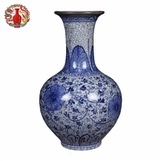


Coral-Ground Reserved Scroll Flower Bow-Qing Dynasty
$460000.00 | 1 piece (Min.Order)
Glaze & Technique:Coral-Red Monochrome Glaze with "Reserved White" Decoration
Dimensions:Caliber 16.5 cm, Height 8.9 cm
Primary Motif:Interlocking Lotus & Peony Scrolls (Baoxianghua), Symbolizing Eternity & Prosperity
Form:Classic Open-Mouthed Imperial Bowl with Flared Rim & Tapered Foot
Reign Mark:Underglaze-Blue Six-Character "Da Qing Yongzheng Nian Zhi" Mark
Body & Glaze:Fine Jingdezhen Imperial Clay, Pure White Interior, Even Coral-Red Exterior
Primary Function:Supreme Imperial Collectible, Ceremonial Court Ware
Artistic Essence:Refined Monochrome Mastery, High-Contrast Purity of Design
Provenance
This bowl was originally fired at the Jingdezhen imperial kilns during the Yongzheng reign of the Qing dynasty. Upon completion, it was delivered to the Imperial Household Department of the Forbidden City, where it served as an imperial ceremonial vessel for birthday celebrations, hall display, and ritual offerings during festivals and ancestral rites. It was preserved within the palace treasury for an extended period.
During the late Qing dynasty, as political circumstances shifted and numerous artifacts from the imperial collection were dispersed, this bowl left the palace and entered the collection of a private antiquities dealer in Beijing. It circulated within the northern Chinese private collecting community, remaining untouched by any restoration or alteration throughout this period.
During the Republic of China era, as the overseas antique trade flourished, this official kiln porcelain was exported to Boston, USA, through established antique export channels. It was acquired by a seasoned Asian-American collector in the region and was carefully preserved in a private storage facility for many years.
In 2018, the collector consigned the bowl to Kaminski Auctions, a prestigious auction house in Boston, where it was listed as Lot.15 in a dedicated sale. Prior to the auction, the auction house's Asian ceramics specialists conducted comprehensive authentication, condition assessment, and dating verification, with official appraisal documents retained in their archives. Following the successful sale, the base of the bowl retained its original paper auction tag, printed with the auction house name, year of sale, and lot number. Additionally, it bears the red anti-counterfeiting wax seal of the North American Antique Dealers' Association, a recognized mark of authenticity in international antiquities trade. This wax seal has remained intact and undisturbed since the auction.
Following the successful bid in 2018, the bowl was acquired by a North American collector of Chinese descent. It was stored for seven years in a climate-controlled, professionally maintained antique storage facility in Boston, protected from light and humidity.
In 2025, the bowl was lawfully repatriated to China through regulated antiquities trade channels. Upon re-entry, it underwent formal appraisal by a national-level cultural relic authentication institution. The examination confirmed that the bowl is an authentic imperial kiln piece from the Yongzheng period, with no signs of restoration or later overglaze additions.
From imperial kiln firing, through palace use, private circulation in China, overseas collection, international auction, and lawful repatriation, this bowl's transmission history spans over 300 years with a clear, unbroken lineage. Every phase of its journey is substantiated by physical evidence and documented records.
Product Introduction

Verity Antique presents the Coral-Ground Reserved Scroll Flower Bowl, an object of refined imperial taste and exceptional technical achievement that exemplifies the peak of Qing dynasty ceramic art during the reign of the Yongzheng Emperor. This bowl is a masterclass in restraint. Its exterior presents a striking visual encounter: a deep, warm, coral-red field against which a delicate, white floral design stands in pure, luminous contrast. The pattern, a continuous scroll of interlocking lotus and peony blossoms, is rendered not with gilding, but through the demanding "reserved white" technique. This choice reflects the Yongzheng Emperor's personal aesthetic, which prized elegant understatement, scholarly refinement, and subtlety over the more opulent and complex styles that would follow. The bowl's crisp, perfect form, its luminous white interior, and its meticulously painted reign mark all speak to its origins in the imperial kilns at Jingdezhen, crafted for the exclusive use of the Qing court.
Product Specifications
|
Parameter |
Details |
|
Material |
Jingdezhen Imperial Porcelain (Fine Kaolin Clay) |
|
Category |
Bowl / Ceremonial Vessel |
|
Style |
Qing Dynasty, Yongzheng Period (1723-1735), Imperial Kiln |
|
Dimensions |
Caliber 16.5 cm, Height 8.9 cm |
|
Glaze Characteristics |
Exterior: Coral-Red Glaze; Interior: Pure White Glaze |
|
Decoration Technique |
Reserved White Design on Coral-Red Ground |
|
Primary Motif |
Interlocking Lotus & Peony (Baoxianghua) Scrolls |
|
Form |
Open-Mouthed Imperial Bowl with Tapered Foot |
|
Reign Mark |
Six-Character Underglaze-Blue Mark in Double Square |
|
Primary Function |
Imperial Collectible; Palace Ceremonial & Display Artifact |
Q&a
Q: Is this a genuinely ancient artifact, not a later reproduction
A: Yes. This bowl is an authentic Yongzheng imperial kiln artifact. Its authenticity is confirmed by its material, its specific "reserved white" technique, the standard and style of its reign mark, and the unbroken chain of transmission substantiated by physical evidence, including the original 2018 auction tag and overseas wax seal.
Q:What makes the Yongzheng period's "reserved white" technique so special?
A: "The "reserved white" technique was particularly favored during the Yongzheng period, reflecting the Emperor's refined and understated personal taste. It involved leaving the floral design in the white of the unfired porcelain and painting the entire surrounding ground, often with a rich monochrome like coral-red. The technique was very demanding, as any slight imperfection in the application would be immediately visible, and the result is an elegant, high-contrast design without the use of gilding or additional overglaze colors.
Q:What is the meaning of the baoxianghua (composite lotus) motif?
A: This figure was acquired from a distinguished European private collection formed in the mid-twentieth century, with documented provenance tracing to the London art market in the 1960s. The provenance is available for examination.
Q: What is the significance of the double-square reign mark?
A: The double-square reign mark is a standard marking used on official imperial porcelain. Its presence, in the specific, fine, and precise calligraphy style of the Yongzheng period, is a primary indicator of authenticity. The mark was applied with cobalt blue under the glaze, and its quality is an important factor in authenticating a piece.
Important Notes
All dimensions are manually measured; minor deviations (1-2 cm) may occur.
Provenance details for certain items are confidential. Please contact us privately for further information.
All items are sold as-is. Please review all descriptions and images carefully before purchasing.
These are precious, irreplaceable antiques. Please handle with the utmost care, avoid direct contact with water and chemicals, and seek professional conservation advice for long-term preservation.
Hot Tags: coral-ground reserved scroll flower bow-qing dynasty, China coral-ground reserved scroll flower bow-qing dynasty
Send Inquiry