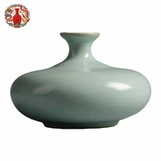

Qing Imperial Ru-Type Glazed Gallbladder Vase/Qing Dynasty
$20000.00 | 1 pkg. (Min.Order)
Era & Kiln:Yongzheng / Early Qianlong Period, Jingdezhen Imperial Kiln
Glaze:Legendary “Sky-Blue After Rain” Ru-Type Glaze, Masterful Song Homage
Crackle Pattern:Delicate Ultra-Fine Network, Controlled Song Ru Aesthetic
Form:Classic Danping (Gallbladder Vase), Elegant Slender Neck to Full Belly
Firing Mark:Sesame-Seed Spur Marks (Zhimading) on Base
Dimensions & Weight:Height ~17 cm, Substantial ~1200 g Heft
Condition:Complete & Intact, No Cracks, Chips, or Restoration
Primary Function:Supreme Imperial Collectible, Museum-Quality Display Piece
Product Introduction

Product Specifications
| Parameter | Details |
|---|---|
| Period | Qing Dynasty, Yongzheng to early Qianlong period (c. 1723-1765) |
| Kiln | Imperial Kiln, Jingdezhen |
| Glaze Type | Ru-style celadon glaze (仿汝釉) - Imperial Ru-type |
| Category | Vase / Flower Vessel / Scholar's Object |
| Dimensions | Height: 17 cm; Mouth Diameter: 3 cm; Base Diameter: 5 cm |
| Weight | Approx. 1200 g |
| Glaze Characteristic | Sky-blue celadon (yuguo tianqing) with fine "crab-claw" crackle network |
| Base Feature | Sesame-seed spur marks (zhimading) - five pinpoint supports |
| Condition | Excellent. Intact with no cracks, chips, or restoration. Glaze shows natural, age-appropriate patina and fine crackle development. |
| Primary Function | Museum-quality collectible antique; Imperial scholar's object |
Aesthetic & Symbolism


This vase represents the Qing imperial court's profound engagement with the aesthetic legacy of the Song dynasty. The gallbladder form (danping) is a study in graceful tension: the long, slender neck rises with elegant restraint, then swells into a full, generous belly that tapers gently to a small, precise foot. It is a shape that seems to breathe.
The Ru-type glaze is the soul of the piece. The Yongzheng and Qianlong emperors held Song ceramics in the highest regard, and their kiln masters devoted years to replicating the legendary "sky-blue after rain" color. Composed with meticulous precision, the glaze achieves the same soft opacity and luminous depth as its Song inspiration. The ultra-fine "crab-claw" crackle-so named for its resemblance to the tiny fissures on a crab's shell-is not a flaw but a celebrated feature, carefully controlled and celebrated as a mark of technical achievement. The sesame-seed spur marks on the base, where the vase was supported on five tiny pins during firing to allow glaze to cover the entire surface, are the fingerprints of the imperial kiln-evidence of the exacting standards demanded by the Qing court. Every element-glaze, crackle, form, and spur marks-speaks to an artistic tradition that looked back to the Song with reverence while asserting its own confident mastery.
Use & Ambiance
As the centerpiece of a serious collection, this vase demands a place of honour: a secure, climate-controlled display case with focused, UV-filtered lighting that allows the legendary Ru-type glaze to reveal its full depth.
For creating an atmosphere of scholarly refinement, in a private study, library, or collectors' retreat, its presence defines the room as one of cultural attainment and quiet sophistication-the perfect complement to fine furniture, rare books, and other objects of the Qing court.
A focus for lifelong contemplation, like its Song inspiration, this vase rewards decades of close attention. Its beauty reveals new subtleties of color, texture, and light with each viewing.
Handle with museum-level care. This is an artifact of significant value and historical importance, requiring two-handed support from underneath, clean cotton gloves, and a stable, padded surface whenever movement is necessary.


Care Instructions
Absolute Handling Protocols:
Use clean, white cotton gloves. Support from underneath with both hands, one cupping the belly, one securing the base. Never lift by the neck.
Strict Cleaning Prohibition:
Do not clean in any way. Do not dust, wipe, brush, or apply any substance. The natural patina and microscopic dust within the crackle are part of its aged character.
Display Environment:
Maintain in a climate-controlled environment: temperature 65-72°F (18-22°C), humidity 45-55%. Avoid direct sunlight, vibrations, and fluctuations. A museum-quality, locking display case is strongly recommended.
Preservation:
Never allow contact with water, flowers, or any functional use. The value-monetary, scholarly, and cultural-is entirely in its preserved, original state.
FAQ
Q: Is this a Song Dynasty original Ru ware piece?
A:No. This is a Qing dynasty imperial kiln Ru-type glaze vase from the Yongzheng or early Qianlong period (c. 1723-1765). Song Ru originals are exceptionally rare-fewer than one hundred exist worldwide, almost all in museums-and command prices in the tens of millions of dollars. This vase represents the next best thing: a genuine eighteenth-century imperial interpretation of that legendary tradition, created at the height of Qing ceramic achievement.
Q: What is the value of this vase?
A:As a genuine Qing imperial kiln Ru-type vase in excellent condition, with fine form, beautiful glaze, and characteristic spur marks, this piece holds significant and stable collector value. The $20,000 price reflects its quality, provenance, and the enduring market for eighteenth-century imperial Chinese ceramics. Please contact us for detailed valuation discussions.
Q: Why are there spur marks on the base?
A: The five sesame-seed spur marks (zhimading) are a deliberate feature, not a flaw. They result from the "full-glaze, spur-fired" technique used for the finest Ru-type wares, where the vase was supported on tiny pins during firing to allow glaze to cover the entire surface-including the base. This technique, originally developed for Song Ru ware, was revived by the Qing imperial kiln as a mark of technical mastery and reverence for the Song tradition.
Why Choose Verity Antique
Verity Antique exists to place into the hands of discerning collectors genuine, honestly described artifacts of Chinese ceramic history. We do not exaggerate ages or attributes. We stand behind every object we represent with careful scholarship and absolute transparency. This Qing Imperial Ru-Type Glazed Gallbladder Vase has been selected for its exceptional glaze quality, its ideal form, its excellent condition, and its place within the esteemed tradition of Qing imperial Ru-type wares. When you acquire an antique through Verity Antique, you gain not merely an object but a partnership-including our expertise, our careful documentation, and our unwavering commitment to authenticity and ethical stewardship. We invite you to become the next steward of this eighteenth-century imperial treasure.
Hot Tags: Qing Imperial Ru-Type Glazed Gallbladder Vase/Qing Dynasty, China Qing Imperial Ru-Type Glazed Gallbladder Vase/Qing Dynasty
Send Inquiry