

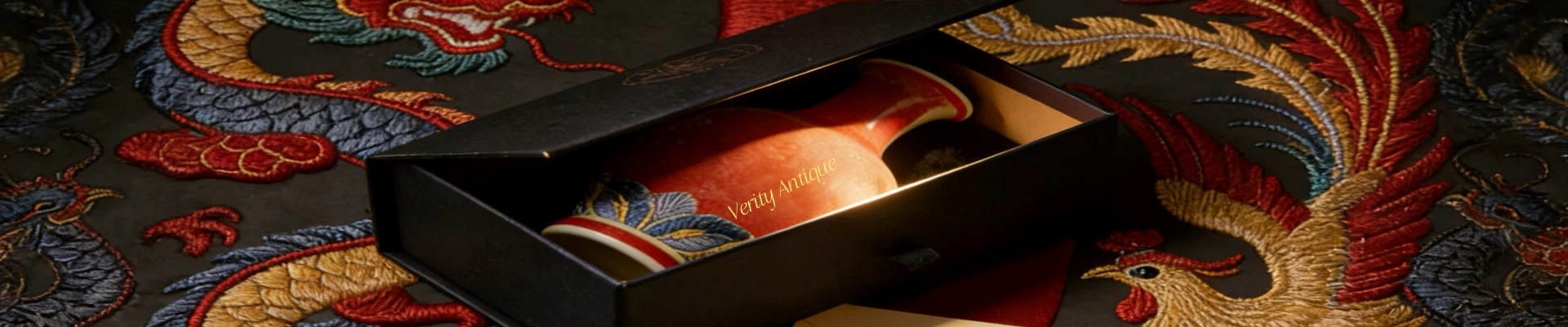
Coral-Ground Reserved Scroll Flower Bowl: The Yongzheng Emperor's Quiet Masterpiece
Jul 07, 2026
Leave a message
The Story
The year is 1725. The Yongzheng Emperor has ruled for three years, and the imperial kilns at Jingdezhen are under his direct, exacting supervision.
Unlike his father, the Kangxi Emperor, who favored bold, exuberant decoration, and unlike his son, the Qianlong Emperor, who would later embrace elaborate, opulent styles, Yongzheng preferred restraint. He valued elegance, subtlety, and scholarly refinement. He rejected ostentation. He demanded perfection.
On this particular morning, a kiln master named Liu is overseeing a critical firing.
The bowl before him is unassuming at first glance-an open-mouthed bowl with a flared rim and a tapered foot. Its interior is pure, luminous white. Its exterior is a deep, warm coral-red.
But the red is not the whole story. On the surface of the bowl, a pattern of interlocking lotus and peony scrolls has been "reserved"-the red glaze was not painted around the design but was applied over the entire bowl. The design itself was masked, protected from the glaze, so that when the glaze was fired, the white clay beneath remained untouched.
The result is a bowl of stunning contrast: the deep, warm coral-red against the pure, luminous white. The pattern is delicate, flowing, continuous-a scroll of baoxianghua, the "precious composite flower" that blends lotus and peony, symbolizing eternity and prosperity.
Liu checks the kiln temperature. He adjusts the airflow. He prays to the god of kilns.
The firing succeeds.
Liu holds the bowl in his hands. It is perfect-the red even, the white crisp, the form flawless.
He does not know that the bowl will outlast him. That it will outlast the Yongzheng Emperor, the Qing dynasty, the fall of the empire. That it will travel from the Forbidden City to the private collections of Beijing, to a dealer's cabinet in Boston, to an auction house in America, and finally back to China.
He only knows that, for one morning, the kiln has given him perfection.

The Emperor: Yongzheng, The Patron of Restraint
The Yongzheng Emperor (reigned 1723–1735) was one of the most discerning patrons of the arts in Chinese history.
His father, the Kangxi Emperor, had established the imperial kilns at Jingdezhen as the premier ceramic workshop in the world. His son, the Qianlong Emperor, would expand the repertoire to include ever more elaborate and opulent designs.
But Yongzheng was different. He preferred restraint. He valued subtlety. He believed that true beauty lay not in ornamentation but in perfection of form and purity of color.
His personal aesthetic is reflected in the ceramics produced during his reign:
| Characteristic | Description |
|---|---|
| Colors | Deep, rich monochromes and subtle pastels |
| Decoration | Elegant, understated, often "reserved" rather than painted |
| Forms | Classic, balanced, inspired by antique bronzes and Song ceramics |
| Marks | Carefully inscribed, often in underglaze blue |
The Yongzheng Emperor personally supervised the imperial kilns. He rejected pieces that did not meet his exacting standards. He demanded perfection, and he got it.
This bowl is a direct expression of the Yongzheng aesthetic: restrained, refined, and technically extraordinary.
The Glaze: Coral-Red, A Color of Celebration
The coral-red glaze (珊瑚红, shanhu hong) is one of the most prized monochrome glazes in Chinese ceramics.
Its color is warm, deep, and luminous-the color of precious coral, of autumn leaves, of the setting sun.
The glaze is made from a mixture of iron oxide and other minerals, fired at a low temperature (around 800°C) in an oxidizing atmosphere. The result is a translucent, glassy surface with a warm, orange-red hue.
Coral-red was particularly favored during the Yongzheng and Qianlong reigns. It was used on ceremonial wares, birthday offerings, and imperial tableware.
On this bowl, the coral-red is evenly applied, creating a rich, uniform field. The glaze is thick enough to be glossy, thin enough to reveal the fine details of the reserved white design.
The Technique: Reserved White, Demanding and Precise
The "reserved white" technique (留白, liubai) is one of the most demanding decoration methods in Chinese ceramics.
The process is counterintuitive:
The potter applies a wax or oil resist to the surface of the bowl, painting the design with a fine brush
The entire bowl is dipped in the coral-red glaze
The glaze covers the whole bowl-the reserved areas and the red areas alike
In the kiln, the glaze melts, but the areas with resist do not adhere. The design remains white, exposed, untouched
This technique requires extraordinary precision. The resist must be applied perfectly. The glaze must be of the right consistency. The firing temperature must be exact.
If the resist fails, the design becomes a blur. If the glaze is too thick, it covers the reserved areas. If the temperature is too high, the white burns.
The fact that this bowl survives in perfect condition is a testament to the skill of the Yongzheng kiln masters.
The Motif: Baoxianghua, The Precious Composite Flower
The design on this bowl is a continuous scroll of baoxianghua (宝相花) -the "precious composite flower."
This motif combines elements of the lotus and the peony, two of the most auspicious flowers in Chinese culture:
| Flower | Meaning |
|---|---|
| Lotus | Purity, enlightenment, rebirth |
| Peony | Wealth, honor, prosperity |
Together, the baoxianghua symbolizes:
Eternity: The continuous scroll has no beginning and no end
Prosperity: The flowers bloom abundantly, promising abundance
Spiritual purity: The lotus rises from mud but remains unstained
Worldly success: The peony brings wealth and honor
The pattern is symmetrical, balanced, and harmonious. Each flower is connected to the next by flowing vines, creating a sense of endless growth.
The Form: Open-Mouthed Bowl, Imperial Simplicity
The bowl's form is classic, elegant, and restrained:
Caliber: 16.5 cm-generous, open
Height: 8.9 cm-shallow, stable
Rim: Flared, delicate
Foot: Tapered, precise
The form is designed for display and ceremony. It is wide enough to hold offerings, shallow enough to be admired from above. The flared rim catches the light, revealing the depth of the coral-red glaze.
The interior is pure white, unadorned, and luminous. This is a hallmark of Yongzheng imperial wares-the interior is left undecorated, allowing the form and the exterior color to speak for themselves.
The Mark: Underglaze Blue, "Da Qing Yongzheng Nian Zhi"
On the base of the bowl, in underglaze blue, is a six-character reign mark: "Da Qing Yongzheng Nian Zhi" (大清雍正年製), meaning "Made in the Great Qing Dynasty, Yongzheng Reign."
The mark is written in standard script, with each character carefully balanced and evenly spaced. It is enclosed in a double square frame, a format commonly used on imperial wares of the Yongzheng period.
The mark is not decorative. It is a statement of authenticity, a declaration that this bowl was made for the imperial court, under the supervision of the emperor himself.
The Provenance: Three Centuries, Unbroken
This bowl's provenance is exceptionally well-documented:
| Period | Location/Owner | Documentation |
|---|---|---|
| 1725 | Jingdezhen imperial kilns | Fired for the Yongzheng court |
| 1725–late Qing | Forbidden City palace treasury | Imperial Household Department records |
| Late Qing | Private antiquities dealer, Beijing | Northern Chinese collecting community |
| Republic of China era | Exported to Boston, USA | Asian-American collector |
| 2018 | Kaminski Auctions, Boston | Lot 15, published auction catalog |
| 2018–2025 | North American collector | Climate-controlled storage, Boston |
| 2025 | Repatriated to China | National-level cultural relic authentication |
The bowl retains its original auction tag from Kaminski Auctions, printed with the auction house name, year, and lot number. It also bears the red anti-counterfeiting wax seal of the North American Antique Dealers' Association.
This is a provenance chain that would satisfy the most rigorous collector.
Rarity and Condition
Yongzheng imperial bowls with coral-red glaze and reserved white decoration are exceptionally rare.
Most were broken, damaged, or lost over the centuries. Those that survive are mostly held in museum collections-the Palace Museum in Beijing, the National Palace Museum in Taipei, the British Museum.
This bowl is one of the few remaining in private hands.
Its condition is exceptional:
Intact: No cracks, no chips, no repairs
No restoration: The glaze is original and undisturbed
Vibrant color: The coral-red is deep, even, and luminous
Crisp design: The reserved white is clean and sharp
Original provenance: The bowl has never been restored or altered
Use and Ambiance
Ideal for: museum display | imperial collection | scholar's study
As a display piece
This bowl commands a position of honor. Place it in a secure, climate-controlled display case with UV-filtered lighting. Its coral-red glaze and reserved white design are best appreciated under soft, focused light.
As a ceremonial object
The bowl was originally used for birthday celebrations, hall display, and ritual offerings. Its presence in a room transforms the space, connecting the viewer to three centuries of imperial tradition.
As a collector's treasure
For the serious collector, this bowl represents a pinnacle-a perfect example of Yongzheng imperial porcelain, with impeccable provenance and exceptional condition.
Care Instructions
| Task | Method |
|---|---|
| Handling | Support with both hands; avoid touching the red glaze |
| Cleaning | Dust with a soft, dry brush. Do not use water or cleaners. |
| Display | Avoid direct sunlight, which can fade the red glaze over time |
| Preservation | A museum-quality display case is strongly recommended |
Specifications
| Attribute | Details |
|---|---|
| Period | Qing Dynasty, Yongzheng period (1723–1735) |
| Material | Jingdezhen imperial porcelain |
| Dimensions | Caliber: 16.5 cm; Height: 8.9 cm |
| Form | Open-mouthed bowl with flared rim and tapered foot |
| Exterior | Coral-red monochrome glaze |
| Interior | Pure white glaze |
| Decoration | Reserved white design: interlocking lotus and peony scrolls |
| Mark | Six-character underglaze blue mark in double square |
| Condition | Exceptional; no restoration; no repairs |
| Provenance | Forbidden City → Beijing private collection → Boston collection → Kaminski Auctions (2018) → North American collection → Repatriated (2025) → Verity Antique |
Inquire Now
Only one bowl is available. The coral glows. The flowers bloom. They do not wait.
Price: $230,000 USD
For detailed condition reports, additional photographs, or to arrange a private viewing, please contact us directly.
To hold this bowl is to hold a fragment of the Yongzheng Emperor's vision-a vision of restraint, refinement, and perfection. To display it is to become the next steward of a three-century legacy.
This genuine Qing Dynasty Yongzheng period coral-ground reserved scroll flower bowl is available exclusively through Verity Antique.