

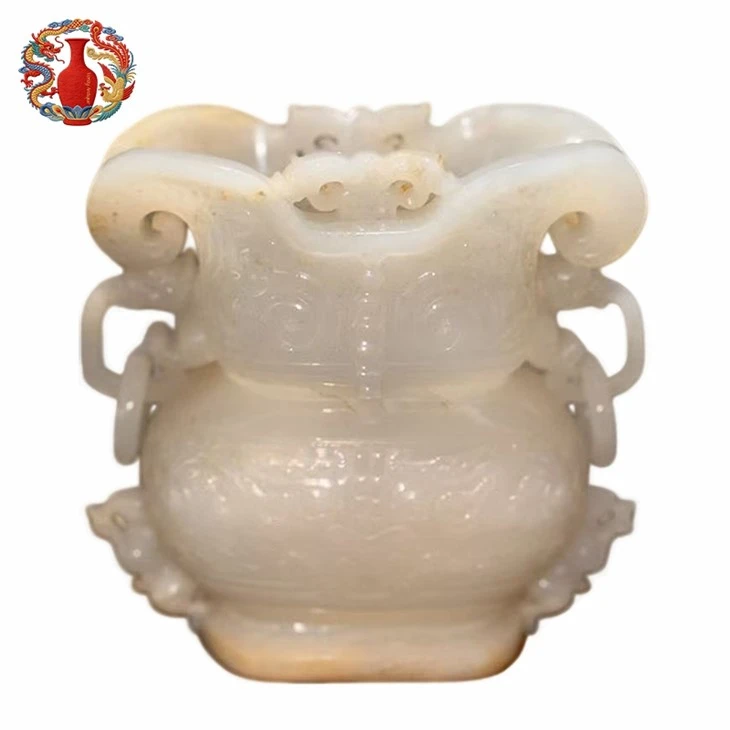

Hetian White Jade Zun With Double Ears/Han Dynasty

Hetian White Jade Zun With Double Ears/Han Dynasty suppliers
Hetian White Jade Zun With Double Ears/Han Dynasty factory

Hetian White Jade Zun With Double Ears/Han Dynasty best

Hetian White Jade Zun With Double Ears/Han Dynasty high quality
Hetian White Jade Zun With Double Ears/Han Dynasty price

Hetian White Jade Zun With Double Ears/Han Dynasty price

Hetian White Jade Zun With Double Ears/Han Dynasty price
Hetian White Jade Zun With Double Ears/Han Dynasty
$200000.00 | 1 pkg. (Min.Order)
Material & Quality:Hetian White Jade, Fine Oily Texture, Natural Russet & Centuries-Old Patina
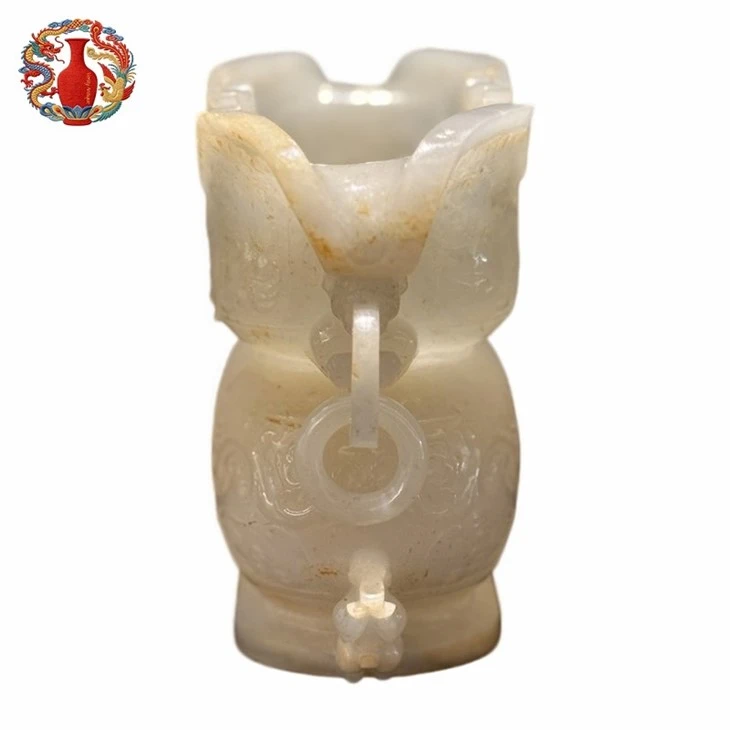
Form & Style:Archaic Bronze Zun Reimagined in Jade – Flared Floral Rim, Slender Neck, Full Belly, Square Pedestal Foot
Handles & Rings:Twin Chi Dragon-Head Handles with Freely Detachable Rings, Carved from Single Block (No Joining)
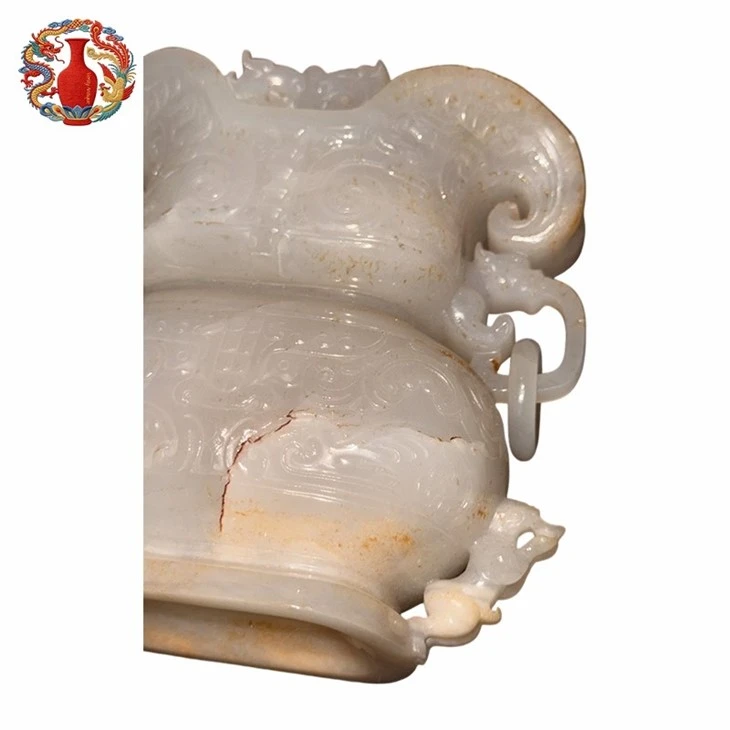
Primary Decoration:Full-Coverage High-Relief Taotie (Beast-Mask) with Scrolling Kui Dragons & Clouds
Carving Technique:Exquisite "Fine-Thread" Style, Extraordinary Precision & Fluidity
Ritual Status:Supreme Imperial Artifact for Ancestral Rites & Symbol of Secular Authority
Primary Function:Museum-Quality Collectible, Han Dynasty Ritual Masterpiece
Provenance
The vessel was originally created as a ritual object exclusively for the Han imperial family and nobility, and from the Han dynasty onward, it was held in the imperial palace treasury, reserved for court rituals and ceremonial display. It served as a core implement within the highest levels of the Han ritual system.
Throughout the Wei-Jin, Tang, and Song dynasties, it continued to be carefully preserved within official imperial repositories, consistently remaining part of the state collection system. This unbroken lineage preserved the vessel's status as a paramount ritual treasure. During the Qing dynasty, it was incorporated into the collection of the Imperial Household Department and recorded as a precious Han jade item for palace display, maintained under the supervision of the Imperial Household staff and used as a ceremonial furnishing deeply treasured by the imperial court.
At the end of the Qing dynasty and the beginning of the Republic, as political circumstances shifted, numerous artifacts from the imperial collection were dispersed among the populace. At that time, this vessel came into the possession of an established, old-line collecting family in Beijing. It was privately and reverently preserved, and meticulously cared for over several decades, during which it remained untouched by any artificial polishing, restoration, or alteration. The piece has retained its original, natural luster, its millennia-old patina, and its subtle, natural color in pristine condition.
In the early 21st century, the vessel was legally transferred through official, legitimate channels of the domestic cultural relic circulation system, and was duly and lawfully acquired by the present collector.
As a treasured ancient jade of significant heritage, this piece follows the traditional mode of inheritance from established collections. While it may lack official documentary records in the modern sense, its millennia-long transmission lineage is clear, and its path of transfer has been entirely lawful and proper. This provenance fully complies with the standards of the ancient jade collecting community and significantly enhances the vessel's archaeological authenticity, scholarly research value, and desirability as a collector's treasure.
Product Introduction

Verity Antique presents the Hetian White Jade Zun with Double Ears, an object of profound historical weight and peerless artistry that embodies the very essence of Han dynasty ritual culture and lapidary mastery. This is not merely a carved stone; it is a frozen moment of imperial power, a silent prayer to the heavens, and a testament to the supreme skill of ancient Chinese artisans. Its form is a deliberate archaism, a conscious revival of the sacred bronze zun vessels of the Shang and Zhou dynasties, a direct lineage that the Han emperors sought to legitimize and continue. Yet, it is transformed by the material itself. The pure, luminous white Hetian jade, with its warm, oily texture and ghostly traces of age-old沁色, breathes a new, ethereal life into the ancient form. The powerful taotie masks that glare from its belly are not just decoration; they are guardians, warding off evil and embodying the fearsome authority of the state. The crowning technical achievement is, of course, the two dragon-head handles with their freely moving rings, a feat of such breathtaking difficulty that it could only have been accomplished by the most gifted artisans in the imperial ateliers, working with the finest materials the empire could provide. This zun is not simply an artifact of the Han dynasty; it is a supreme synthesis of Chinese civilization's deepest ritual impulses and its most extraordinary technical capabilities, rendered in the eternal medium of jade.
Product Specifications
|
Parameter |
Details |
|
Material |
Hetian White Jade (Single Block) |
|
Category |
Ritual Vessel / Ceremonial Display Object |
|
Style |
Han Dynasty (206 BC – 220 AD), Imperial & Noble Class |
|
Dimensions |
Length 13 cm, Width 7.5 cm, Height 12 cm |
|
Carving Techniques |
High Relief, Openwork, Integral Hollowing, Moveable Rings, Fine-Thread Carving |
|
Primary Motif |
Taotie (Beast Mask), Kui Dragons, Clouds |
|
Form |
Archaic Bronze "Zun" Form |
|
Primary Function |
Supreme Collectible Art; Court Ritual & Display Artifact |
Q&a
Q: Is this a genuinely ancient artifact, not a later reproduction?
A: Yes. This vessel is an authentic Han dynasty artifact. Its authenticity is confirmed by its material, its carving techniques-particularly the non-join, integrated movable rings that cannot be replicated by modern forgers-and its ancient, unworn patina and沁色. These characteristics, alongside its well-documented provenance, place it firmly within the Han period.
Q:How does the "integral hollowing and ring carving" technique work?
A: This technique, also known as "one-piece hollow jade with movable rings," is one of the supreme achievements of Chinese jade carving. The artisan must carve the ring and its holder out of the very same block of jade, leaving no cuts or joins. This requires extraordinary spatial awareness, incredible patience, and immense skill. Even a single mistake in the carving process would ruin the entire, irreplaceable piece of jade.
Q:What is the significance of the taotie mask motif?
A: The taotie (beast mask) is the most iconic motif of Chinese Bronze Age art. It is a composite, mythical creature of great power and is believed to be a protective and apotropaic symbol. Its presence on a ritual vessel serves to ward off evil spirits and to project the awe-inspiring authority of the state and its ancestors.
Q:What does the white jade of this quality represent?
A: The finest white jade, known as "mutton fat" or "white as milk," was the most highly prized material in ancient China, exceeding even gold in its cultural value. It is inextricably linked to the highest ideals of Confucian virtue-purity, integrity, and moral perfection-and was reserved exclusively for the imperial family and the highest rank of nobility for the most important ritual and ceremonial objects.
Important Notes
All dimensions are manually measured; minor deviations (1-2 cm) may occur.
Provenance details for certain items are confidential. Please contact us privately for further information.
All items are sold as-is. Please review all descriptions and images carefully before purchasing.
These are precious, irreplaceable antiques. Please handle with the utmost care, avoid direct contact with water and chemicals, and seek professional conservation advice for long-term preservation.
Hot Tags: hetian white jade zun with double ears/han dynasty, China hetian white jade zun with double ears/han dynasty
Send Inquiry
You Might Also Like


