
Incised Floral Ding Yao Vase/Song Dynasty
$25000.00 | 1 pkg. (Min.Order)
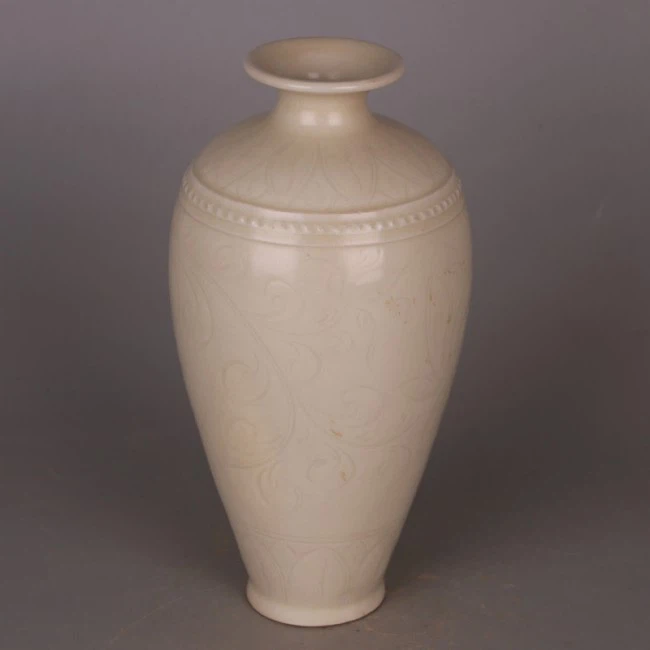
Material & Style: Ding-Type Porcelain, Song Dynasty Ding Kiln Classical
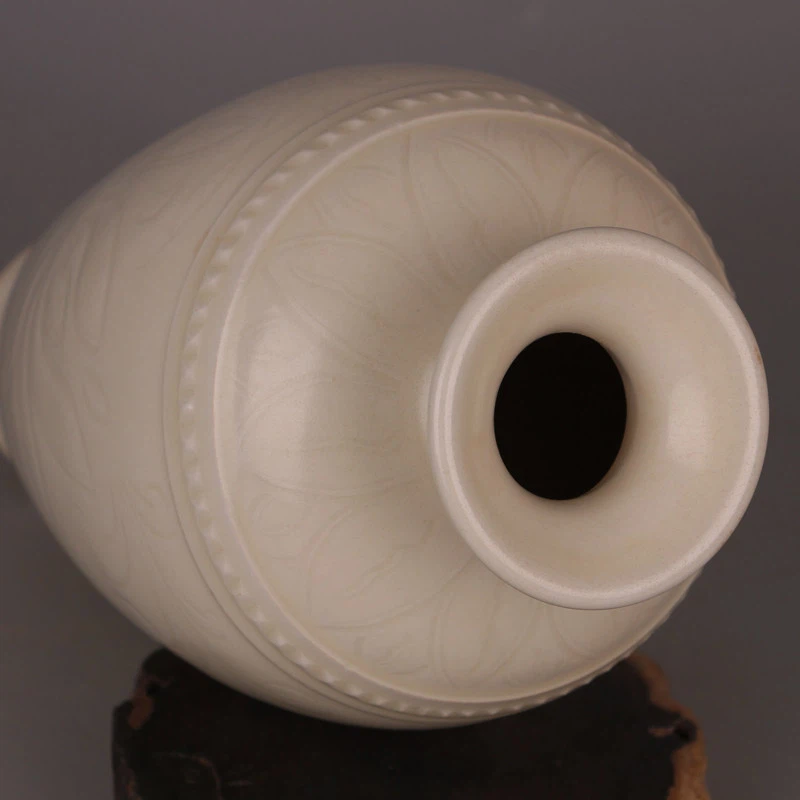
Glaze & Decoration: Creamy-White Glaze with Fluidly Incised Floral Motif
Form: Classical Meiping (Plum Vase) Shape
Dimensions: Height: 26.5 cm, Belly Diameter: 13 cm
Body Characteristic: Fine, Thin, Hard-Paste Porcelain
Primary Function: Supreme Collectible Art, Literati Display & Contemplation
Aesthetic Essence: Song Dynasty Scholar's Studio Ambiance, Natural Elegance
Product Introduction

Product Specifications
| Parameter | Details |
|---|---|
| Material | Ding Ware: Fine, Hard-Paste Porcelain with Creamy-White Glaze |
| Category | Vase / Scholar's Object / Contemplative Sculpture |
| Style | Song Dynasty (960-1279), Ding Kiln Tradition |
| Period | 11th–12th Century, Northern Song Dynasty |
| Dimensions | Height: 26.5 cm; Mouth Diameter: 7 cm; Belly Diameter: 13 cm; Base Diameter: 7 cm |
| Form | Meiping (Plum Vase) |
| Glaze & Decoration | Creamy-White Glaze with Incised Floral Motif |
| Firing Method | Fushao (Upside-Down Firing) with Unglazed Rim |
| Primary Motif | Incised Floral Scrolls (Peony or Lotus) |
| Primary Function | Supreme Collectible Art; Literati Display & Contemplation |
| Condition | Excellent, with crisp incised lines, creamy glaze of even tone, characteristic unglazed rim, and no restoration |
Aesthetic & Symbolism

Use & Ambiance
As an Anchor of Serenity in a Scholar's Retreat: This Meiping belongs in a space dedicated to calm and contemplation. Place it on a classic dark wood stand in a study, library, or meditation room, where its quiet presence and poetic form can inspire reflection and provide a focal point of timeless beauty.
Creating a Dialogue Between Past and Present: In a modern minimalist interior, it serves as a powerful connection to cultural heritage. Its warm white glaze and organic form complement contemporary design, adding depth, history, and a tactile quality that balances sleek surfaces and lines.
A Connoisseur's Piece for Appreciating Technique: For the discerning collector, this vase offers a perfect study in Ding ware aesthetics. The quality of the incised work, the color and texture of the glaze, and the fidelity to the archaeological patina make it an exceptional example of high-level reproduction artistry, worthy of close inspection.
Enhancing Ambiance with Soft, Indirect Light: The incised lines and creamy glaze respond beautifully to soft, diffused lighting. Position it where light can gently wash over its curves, causing the carved patterns to emerge and recede subtly, creating a dynamic, living surface that changes throughout the day.
Care Instructions
Handling with Respect for its Form:
Always handle with clean, dry hands, supporting the body firmly from the base and midsection. Avoid lifting by the narrow neck. Its fine porcelain body is strong but can be brittle if struck.
Gentle Dry Maintenance Only:
To preserve the delicate, aged surface finish, only dry dusting is recommended. Use a very soft, clean brush. Do not use water, chemicals, or abrasive cloths, as they can damage the carefully applied patina and the soft luster of the glaze.
Stable, Protected Display Environment:
Display in a stable location safe from vibrations, direct sunlight (which can subtly discolor the glaze over time), and extreme humidity changes. A display case is ideal to protect it from dust and accidental contact.
Purely Decorative and Contemplative Use:
This is a work of art. While historically used for holding plum branches, we advise against using it as a functional vase with water to prevent any risk of mineral deposits or water damage to the unglazed foot ring and the carefully crafted aged appearance.
FAQ
Q: What is the "tear-drop"effect on Ding ware?
A: During firing, the thick, viscous glaze would sometimes run slightly, creating thicker, opaque pools that resemble hanging tears, often seen near the foot of the vessel. This was a natural characteristic of the firing process and is highly admired as a mark of authenticity and ancient technique.
Q: Why are many Ding ware pieces, like this one, left unglazed on the rim?
A: Many high-quality Ding ware vessels were fired upside-down (the "fushao" method) to achieve a perfectly level rim. To prevent the glaze from fusing the piece to the kiln shelf, the rim was left unglazed and often later bound with a metal (e.g., copper, silver) rim. This unglazed rim is a distinctive feature of fine Ding ware.
Why Choose Verity Antique
Verity Antique acquired this exceptional Song dynasty Ding ware vase from a distinguished Japanese private collection formed over several decades, with documented provenance tracing to late Qing China. The vase has been examined independently and confirmed as authentic Song period Ding ware, its attribution verified through analysis of the porcelain body, glaze characteristics, incising technique, and form. Its condition is exceptional: the incised lines remain crisp and clear, the creamy glaze retains its original warm tone with characteristic tear-drop pooling, the unglazed rim is perfectly preserved, and there is no restoration whatsoever. When you acquire this vase from Verity Antique, you receive not merely a masterpiece of Song ceramic art but a documented fragment of the scholarly refinement that defined China's most revered cultural epoch. We provide the scholarship, the provenance and the absolute confidence that permits you to display this work not as decoration but as a testament to Ding ware genius-and to your own discerning judgment in recognising the authentic, the subtle and the truly extraordinary.
Hot Tags: incised floral ding yao vase/song dynasty, China incised floral ding yao vase/song dynasty
Send Inquiry
You Might Also Like